# ch12-Spring Integration
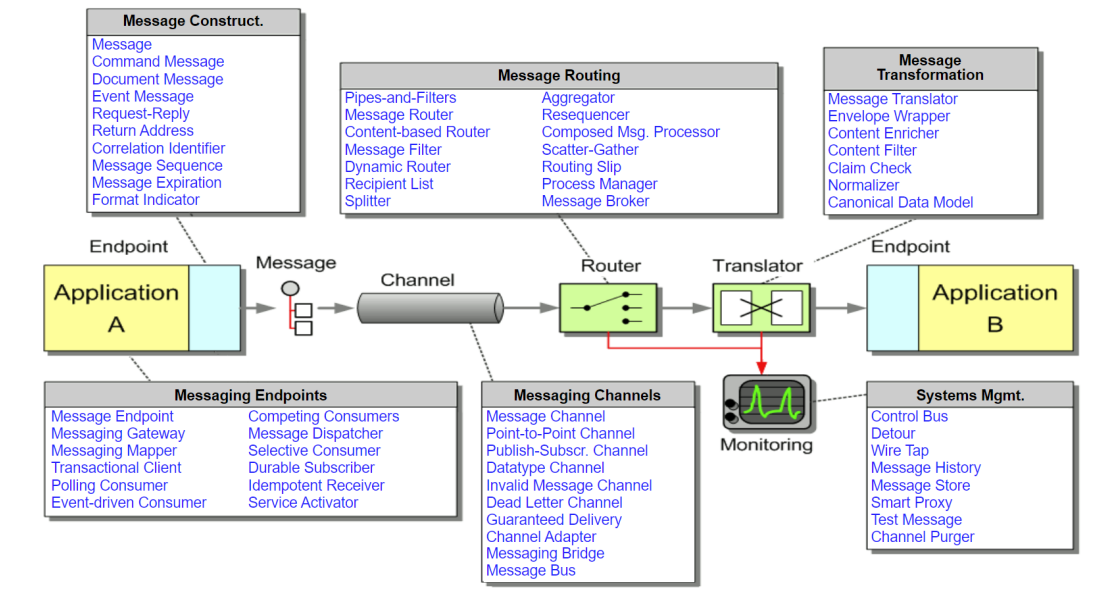
# EIP(Enterprise Integration Patterns,企业集成模式)
Enterprise Integration Pattern -
组成简介:https://www.cnblogs.com/loveis715/p/5185332.html
# Integration Pattern Language
# spring integration
# 一个简单的集成流(例子)
# 本节课目标
# 一个简单的集成流
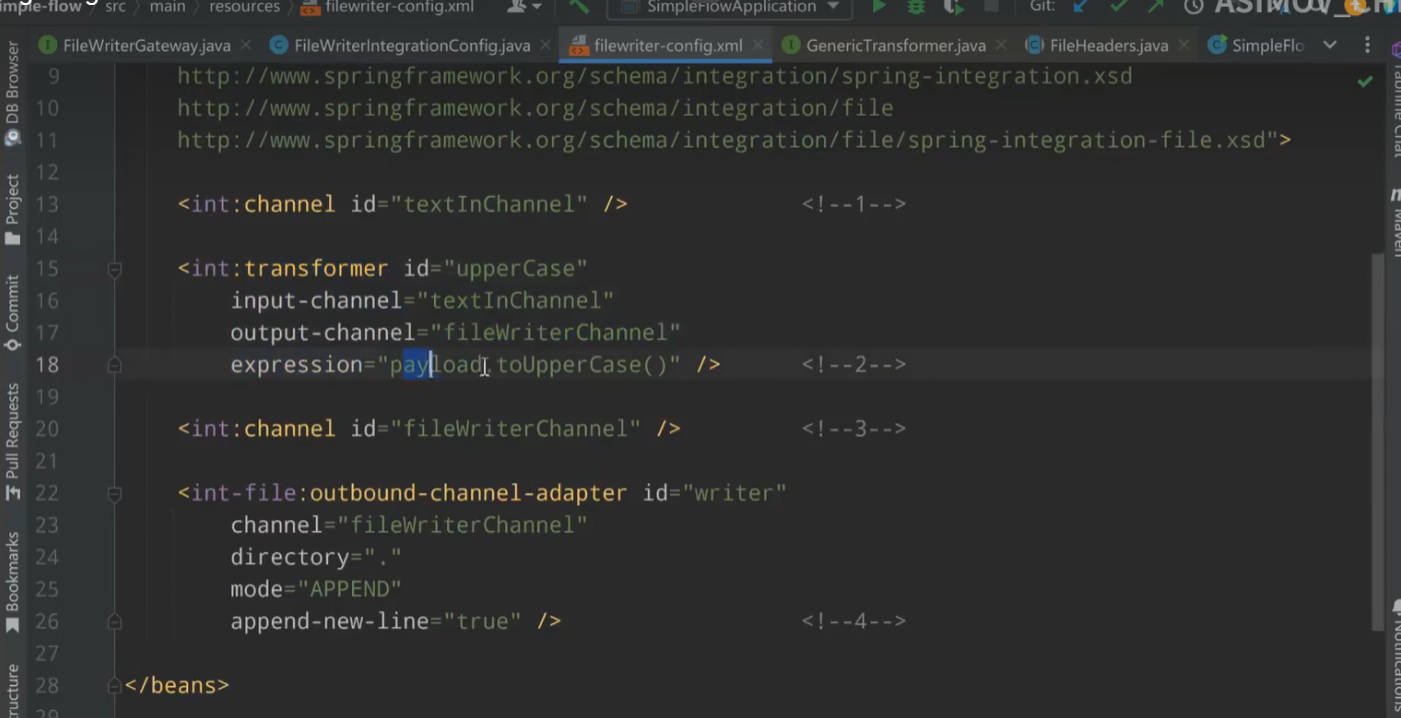
- 集成流配置
- XML配置
- Java配置
- 使用DSL的Java配置
- XML配置
<dependency>
    <groupId>org.springframework.boot</groupId>
    <artifactId>spring-boot-starter-integration</artifactId>
</dependency>
<dependency>
    <groupId>org.springframework.integration</groupId>
    <artifactId>spring-integration-file</artifactId>
</dependency>
# 消息
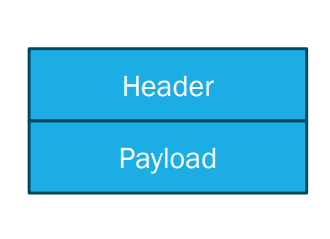
# 集成流( integration flow)
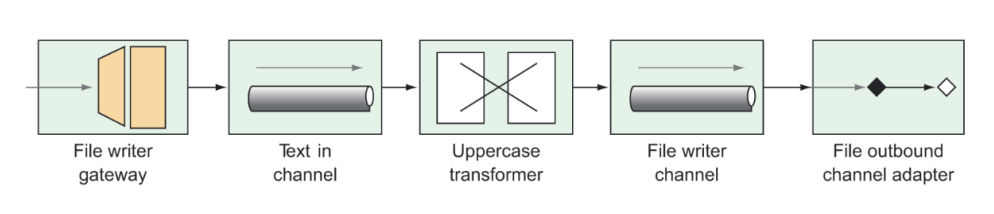
# 集成流的组件介绍
# 集成流的组件
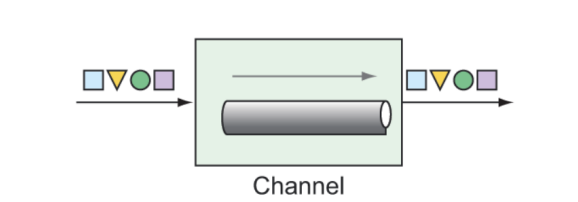
- Channels(通道) —Pass messages from one element to another.
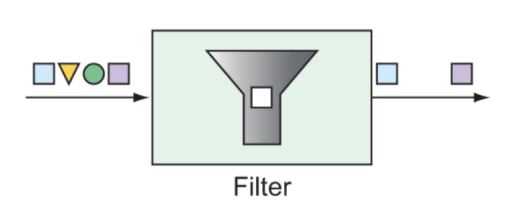
- Filters(过滤器) —Conditionally allow messages to pass through the flow based on some criteria.
- Transformers(转换器) —Change message values and/or convert message payloads from one type to another.
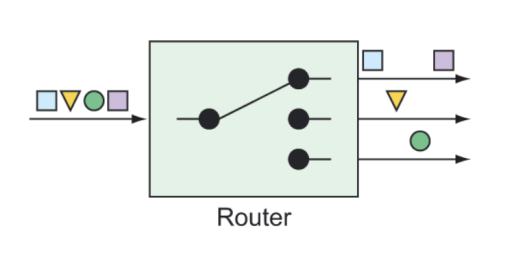
- Routers(路由器) —Direct messages to one of several channels, typically based on message headers.
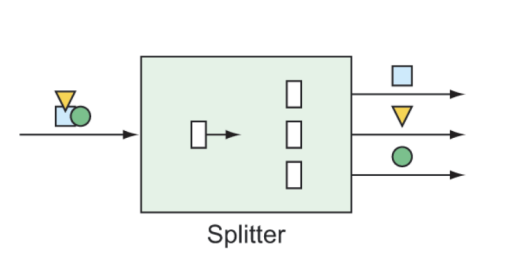
- Splitters(切分器) —Split incoming messages into two or more messages, each sent to different channels.
- Aggregators(聚合器) —The opposite of splitters, combining multiple messages coming in from separate channels into a single message.
- Service activators(服务激活器) —Hand a message off to some Java method for processing, and then publish the return value on an output channel.
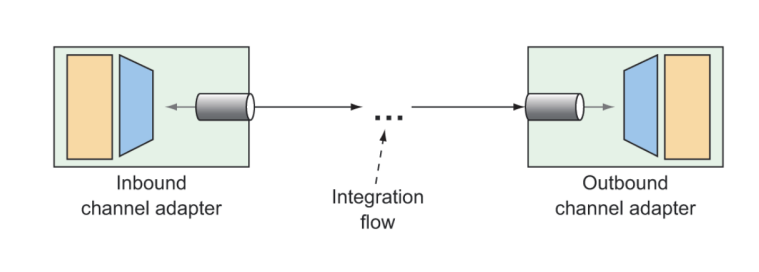
- Channel adapters(通道适配器) —Connect a channel to some external system or transport. Can either accept input or write to the external system.
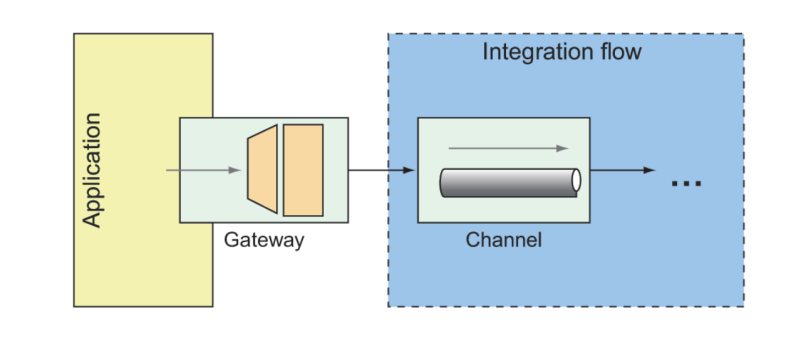
- Gateways(网关) —Pass data into an integration flow via an interface.
# 消息通道(Message channels)
- PublishSubscribeChannel 1对多,1个发布多个订阅
- QueueChannel FIFO
- PriorityChannel 优先级队列,不按照FIFO出队
- RendezvousChannel
- DirectChannel(缺省)
- ExecutorChannel
- FluxMessageChannel
@Bean
public MessageChannel orderChannel() {
	return new PublishSubscribeChannel();
}
# 过滤器(Filters)
@Filter(inputChannel="numberChannel",
outputChannel="evenNumberChannel")
public boolean evenNumberFilter(Integer number) {
	return number % 2 == 0;
}
# 路由器(Routers )
@Bean
@Router(inputChannel="numberChannel")
public AbstractMessageRouter evenOddRouter() {
	return new AbstractMessageRouter() {
		@Override
		protected Collection<MessageChannel>
			determineTargetChannels(Message<?> message) {
		Integer number = (Integer) 				  message.getPayload();
    		if (number % 2 == 0) {
    			return Collections.singleton(evenChannel());
    		}
    	return Collections.singleton(oddChannel());
    	}
	};
}
@Bean
public MessageChannel evenChannel() {
	return new DirectChannel();
}
@Bean
public MessageChannel oddChannel() {
	return new DirectChannel();
}
# 切分器(Splitters)
public class OrderSplitter {
    public Collection<Object> splitOrderIntoParts(PurchaseOrder po) {
        ArrayList<Object> parts = new ArrayList<>();
        parts.add(po.getBillingInfo());
        parts.add(po.getLineItems());
        return parts;
    }
}
@Bean
@Splitter(inputChannel="poChannel",
outputChannel="splitOrderChannel")
public OrderSplitter orderSplitter() {
	return new OrderSplitter();
}
@Bean
@Router(inputChannel="splitOrderChannel")
public MessageRouter splitOrderRouter() {
    PayloadTypeRouter router = new PayloadTypeRouter();
    router.setChannelMapping(
    BillingInfo.class.getName(), "billingInfoChannel");
    router.setChannelMapping(
    List.class.getName(), "lineItemsChannel");
    return router;
}
# 服务激活器(Service activators )
# MessageHandler实现
- 处理完流就截止
@Bean
@ServiceActivator(inputChannel="someChannel")
public MessageHandler sysoutHandler() {
    return message
    -> {
    System.out.println("Message payload: " + message.getPayload());
	};
}
# GenericHandler实现
- 有返回值
@Bean
@ServiceActivator(inputChannel="orderChannel",
outputChannel="completeOrder")
public GenericHandler<TacoOrder> orderHandler(
		OrderRepository orderRepo) {
    return (payload, headers)
    -> {
    return orderRepo.save(payload);
    };
}
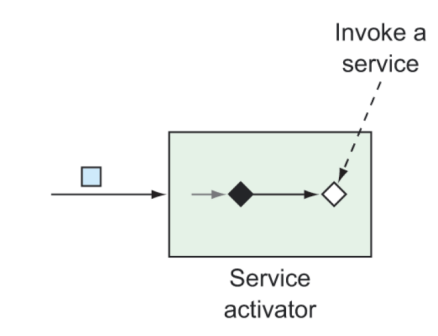
与transfomer的区别
- transfomer:对数据进行转换加工
- 服务激活器:激活另一个服务,可能是存储或者外部的功能
# 网关(Gateways )
只需要写一个接口。 Gateways 是应用程序代码和消息系统之间的桥梁。它们抽象了消息发送和接收的细节,使得应用程序代码可以通过方法调用的方式与消息系统交互,而无需直接使用消息API。这样可以使应用程序代码保持简洁,同时也便于测试。
# 双向网关
- requets channel 输入
- repley channel 获得返回值(Spring会在这个管道上一直等,同步)
import org.springframework.integration.annotation.MessagingGateway;
import org.springframework.stereotype.Component;
@Component
@MessagingGateway(defaultRequestChannel="inChannel",defaultReplyChannel="outChannel")
public interface UpperCaseGateway {
	String uppercase(String in);
}
@Bean
public IntegrationFlow uppercaseFlow() {
    return IntegrationFlows
    .from("inChannel")
    .<String, String> transform(s
    -> s.toUpperCase())
    .channel("outChannel")
    .get();
}
# 通道适配器(Channel adapters)
Adapters 则是用于将消息从一种格式转换为另一种格式,或者从一种传输协议转换为另一种传输协议。Inbound把外部系统的消息格式转为spring integration消息,outbound把spring integration消息转为外部系统消息。 例如,JMS适配器可以将JMS消息转换为Spring Integration通用消息,HTTP适配器可以将HTTP请求和响应转换为Spring Integration消息。
@Bean
@InboundChannelAdapter(
poller=@Poller(fixedRate="1000"), channel="numberChannel")
public MessageSource<Integer> numberSource(AtomicInteger source) {
    return () -> {
    return new GenericMessage<>(source.getAndIncrement());
    };
}
@Bean
@InboundChannelAdapter(channel="file-channel",
poller=@Poller(fixedDelay="1000"))
public MessageSource<File> fileReadingMessageSource() {
    FileReadingMessageSource sourceReader = new FileReadingMessageSource();
    sourceReader.setDirectory(new File(INPUT_DIR));
    sourceReader.setFilter(new SimplePatternFileListFilter(FILE_PATTERN));
    return sourceReader;
}
- poller:多长时间触发一次,每秒触发一个消息的源头
# 通道适配器(DSL定义)
@Bean
public IntegrationFlow someFlow(AtomicInteger integerSource) {
    return IntegrationFlows
    .from(integerSource, "getAndIncrement",
    c -> c.poller(Pollers.fixedRate(1000)))
    ...
    .get();
}
@Bean
public IntegrationFlow fileReaderFlow() {
    return IntegrationFlows
    .from(Files.inboundAdapter(new File(INPUT_DIR))
    .patternFilter(FILE_PATTERN))
    .get();
}
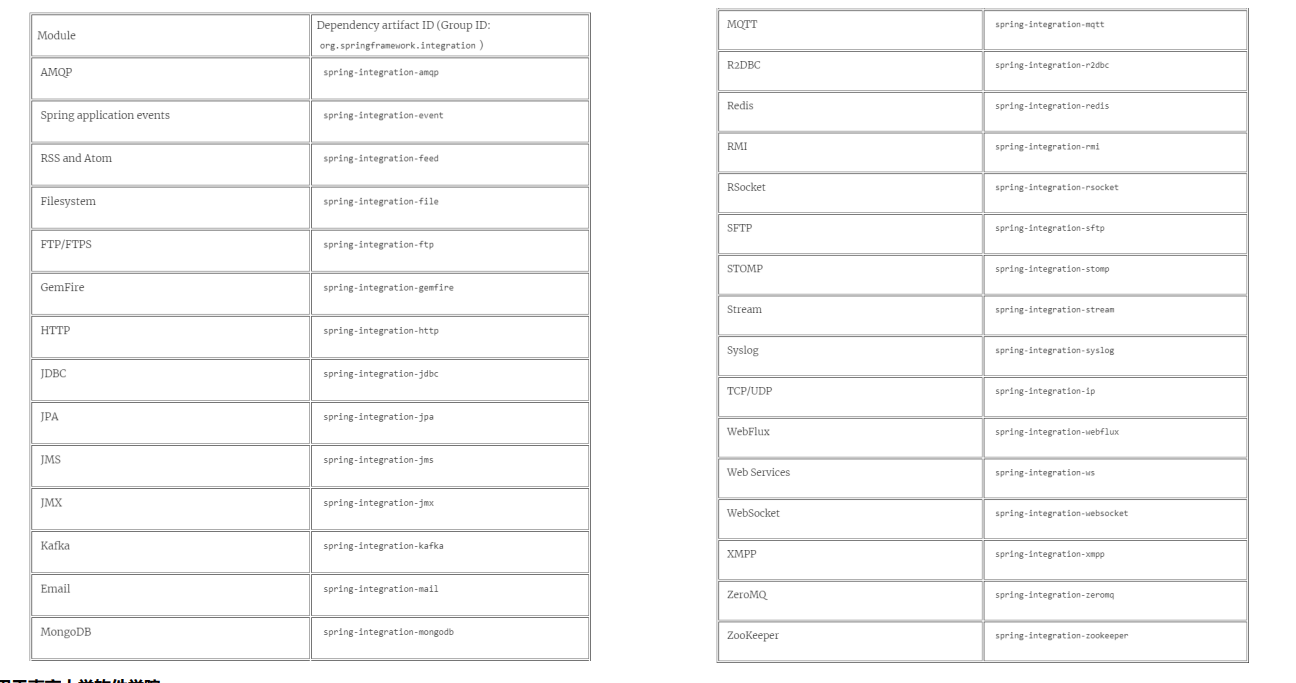
# 端点模块(Endpoint modules)
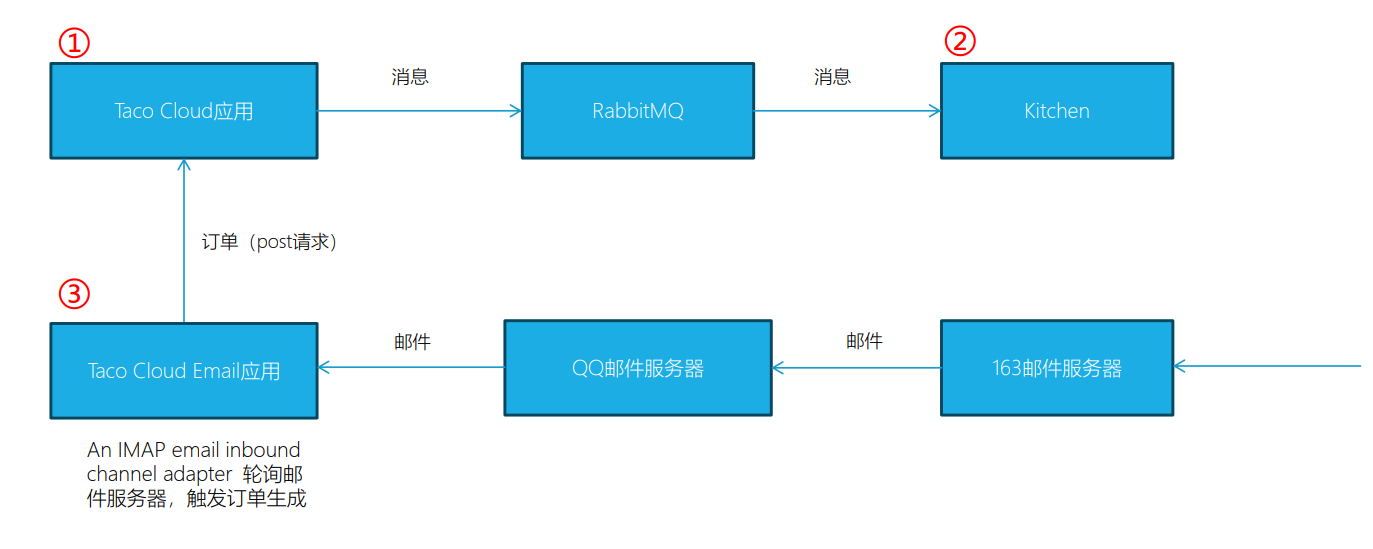
# 电子邮件集成流(本节课目标)
# 本节课目标
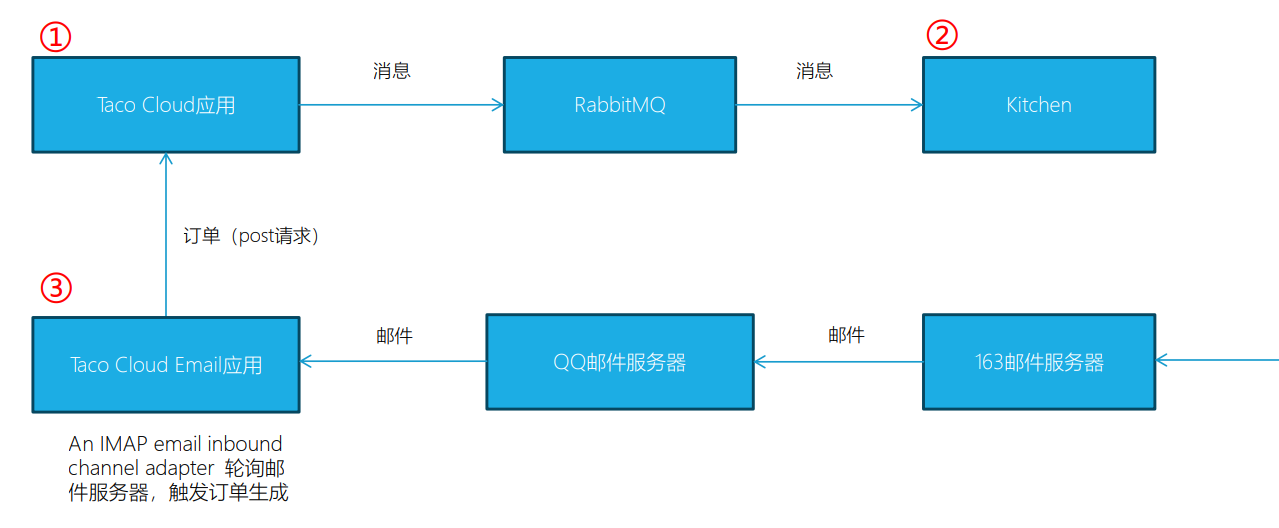
# 电子邮件端点模块
<dependency>
<groupId>org.springframework.integration</groupId>
    <artifactId>spring-integration-mail</artifactId>
</dependency>
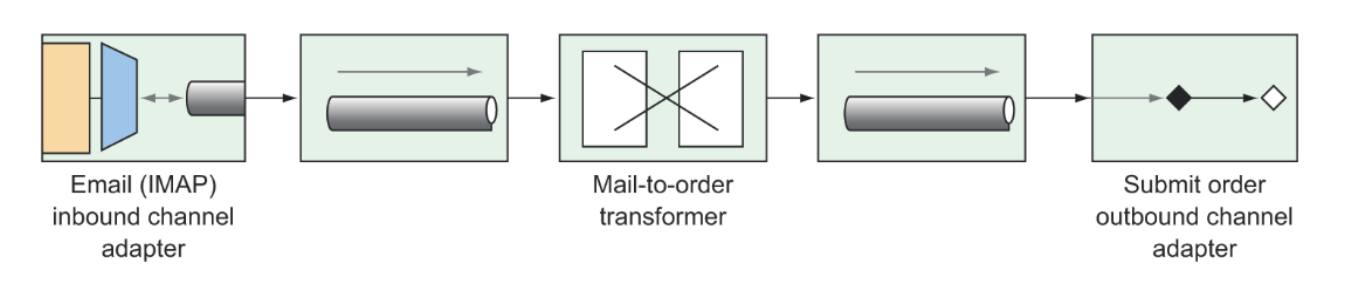
# 构建集成流
- TacoOrderEmailIntegrationConfig.java (DSL方式)
-
adaptor:
package tacos.email; import org.springframework.context.annotation.Bean; import org.springframework.context.annotation.Configuration; import org.springframework.integration.dsl.IntegrationFlow; import org.springframework.integration.dsl.IntegrationFlows; import org.springframework.integration.dsl.Pollers; import org.springframework.integration.mail.dsl.Mail; @Configuration public class TacoOrderEmailIntegrationConfig { @Bean public IntegrationFlow tacoOrderEmailFlow( EmailProperties emailProps, EmailToOrderTransformer emailToOrderTransformer, OrderSubmitMessageHandler orderSubmitHandler) { //创建集成流 return IntegrationFlows .from(Mail.imapInboundAdapter(emailProps.getImapUrl()), e -> e.poller( Pollers.fixedDelay(emailProps.getPollRate()))) .transform(emailToOrderTransformer) .handle(orderSubmitHandler) .get(); } }- transform(emailToOrderTransformer):邮件的内容转成order对象
transformer
package tacos.email;

import org.slf4j.Logger;
import org.slf4j.LoggerFactory;
import org.springframework.integration.mail.transformer.AbstractMailMessageTransformer;
import org.springframework.integration.support.AbstractIntegrationMessageBuilder;
import org.springframework.integration.support.MessageBuilder;
import org.springframework.stereotype.Component;

import javax.mail.Message;
import javax.mail.MessagingException;
import javax.mail.internet.InternetAddress;
import java.io.IOException;
import java.util.ArrayList;
import java.util.HashMap;
import java.util.List;
import java.util.Map;

@Component
public class EmailToOrderTransformer
        extends AbstractMailMessageTransformer<EmailOrder> {

    private static Logger log =
            LoggerFactory.getLogger(EmailToOrderTransformer.class);

    private static final String SUBJECT_KEYWORDS = "TACO ORDER";
    static  private  Map<String, Ingredient> map = new HashMap<String, Ingredient>();

    static {
        map.put("flourTortilla", new Ingredient("FLTO", "Flour Tortilla", Ingredient.Type.WRAP));
        map.put("cornTortilla", new Ingredient("COTO", "Corn Tortilla", Ingredient.Type.WRAP));
        map.put("groundBeef", new Ingredient("GRBF", "Ground Beef", Ingredient.Type.PROTEIN));
        map.put("carnitas", new Ingredient("CARN", "Carnitas", Ingredient.Type.PROTEIN));
        map.put("tomatoes", new Ingredient("TMTO", "Diced Tomatoes", Ingredient.Type.VEGGIES));
        map.put("lettuce", new Ingredient("LETC", "Lettuce", Ingredient.Type.VEGGIES));
        map.put("cheddar", new Ingredient("CHED", "Cheddar", Ingredient.Type.CHEESE));
        map.put("jack", new Ingredient("JACK", "Monterrey Jack", Ingredient.Type.CHEESE));
        map.put("salsa", new Ingredient("SLSA", "Salsa", Ingredient.Type.SAUCE));
        map.put("sourCream", new Ingredient("SRCR", "Sour Cream", Ingredient.Type.SAUCE));
    }
    @Override
    protected AbstractIntegrationMessageBuilder<EmailOrder>
    doTransform(Message mailMessage) throws Exception {
        EmailOrder tacoOrder = processPayload(mailMessage);
        return MessageBuilder.withPayload(tacoOrder);
    }

    private EmailOrder processPayload(Message mailMessage) {
        try {
            String subject = mailMessage.getSubject();
            if (subject.toUpperCase().contains(SUBJECT_KEYWORDS)) {
                String email =
                        ((InternetAddress) mailMessage.getFrom()[0]).getAddress();
                byte[] bytes = new byte[100];
                mailMessage.getInputStream().read(bytes);
                String content = new String(bytes);
                return parseEmailToOrder(email, content);
            }
        } catch (MessagingException e) {
            log.error("MessagingException: {}", e);
        } catch (IOException e) {
            log.error("IOException: {}", e);
        }
        return null;
    }

    private EmailOrder parseEmailToOrder(String email, String content) {
        EmailOrder order = new EmailOrder(email);
        String[] lines = content.split("\\r?\\n");
        for (String line : lines) {
            if (line.trim().length() > 0 && line.contains(":")) {
                String[] lineSplit = line.split(":");
                String tacoName = lineSplit[0].trim();
                String ingredients = lineSplit[1].trim();
                String[] ingredientsSplit = ingredients.split(",");
                List<Ingredient> ingredientCodes = new ArrayList<>();
                for (String ingredientName : ingredientsSplit) {
                    String code = ingredientName.trim();
                    if (code != null) {
                        ingredientCodes.add(map.get(code));
                    }
                }

                Taco taco = new Taco(tacoName);
                taco.setIngredients(ingredientCodes);
                order.addTaco(taco);
            }
        }
        return order;
    }
}